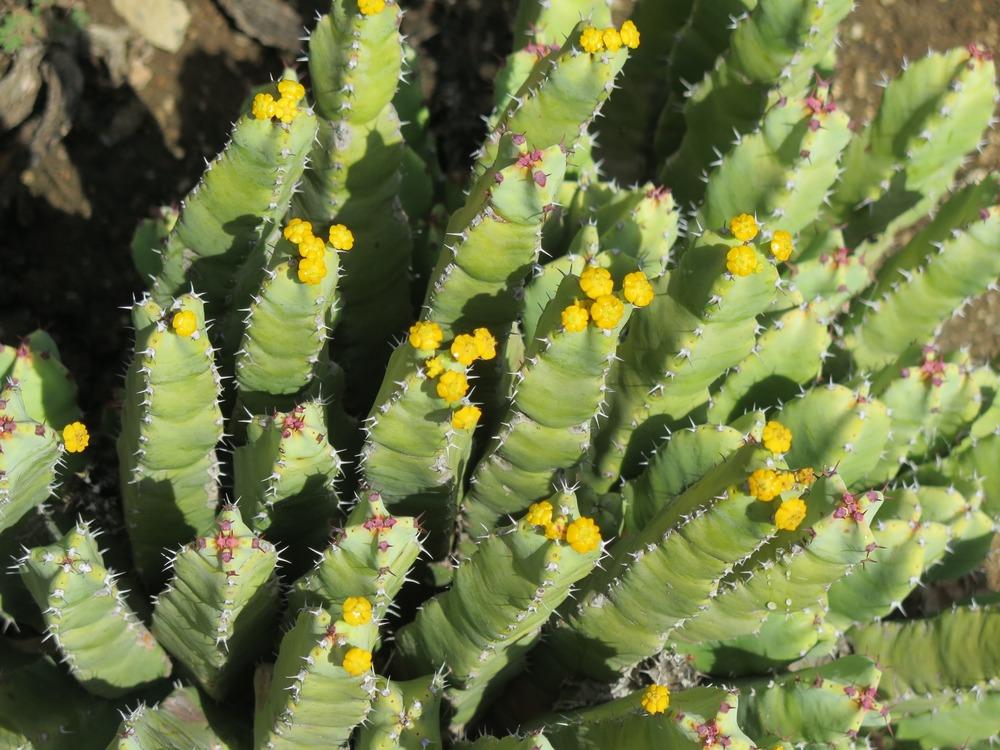
Properties: Pungent, hot, toxic
Meridans Entered:
Primary: Stomach, Lung, Large Intestine
Traditional Actions/Indications:
- Stops pain
Chronic pain from rheumatic, gouty, and neuralgic conditions, tuberculosis and toothache
Suggested Daily Dosage: Latex-like resin is extracted from the plant and diluted with other medicinals to be applied to the area of pain.
Cautions: Must not be used pure! May cause blistering on the skin at too high concentration and internal use causes vomiting and diarrhoea. It should always be handled with care to avoid dust.
It used to be used internally in western herbalism but has been discontinued due to severity of its actions, only to re-emerge in modern medicine as a potential injection into sites of chronic pain aimed at destroying nerve endings.
Notable Constituents:
- Resiniferatoxin
Scoring 16 billion Scoville heat units, pure resiniferatoxin is about 500 to 1000 times hotter than pure capsaicin! It activates TRPV1 channels in sensory nerves. This stimulation is followed by desensitisation and analgesia, in part because the nerve endings die from calcium overload. It is currently being investigated for use in chronic pain treatments where it is injected into the site of pain, or close to the spine, accompanied by an analgesic to cover the intense burning which is produces as it kills the nerve ending but results in desensitised nerves for weeks or months after.
Notes:
To give an idea of the dilution required, Henrietta's Herbal (1898) gives the following recipe:"Take of powdered euphorbium ½ drachm, coarsely powdered cantharides and mezereon bark, of each, 2 drachms, rectified spirits of wine 2 ½ fluid ounces. Mix together, digest for 8 days, then press and filter, and to the filtered tincture add, white colophony 1 ounce, white turpentine 6 drachms. With this preparation, paper or silk may be coated three separate times, by means of a soft sponge, and, when dry, forms an excellent irritating plaster for rheumatic, gouty, and neuralgic pains."
Does not appear in any formulae listed on this site
Research Links & References: (click to display)
Research Links:
Reference Notes:
Individual herb information has sourced mainly from TCM Wiki and American Dragon for basic data and then updated manually with my own notes. Zhou, Xie and Yan (2011): Encyclopedia of Traditional Chinese Medicines, Vol. 5, and A+ Medical Encyclopaedia have been used for entries not available from those sources with additional material searched for and filled in where available. Western herbs not appearing in the Chinese literature have used Ross (2010): Combining Western Herbs and Chinese Medicine: A Clinical Materia Medica, White Rabbit Institute of Healing and therapeutika.ch. Choices of which source to use or combine have been my own.
These pages are intended to assist clinicians and are not intended for self-diagnosis or treatment for which a qualified professional should be consulted. Actions and indications are taken from traditional uses and do not necessarily reflect the evidence base which should be researched independently. Dosages are for guidance only and will vary dependening on the potency of the batch and the tolerance of the individual so should be evaluated by a professional based on individual needs.